
2025
Quick Commerce

The problem? Customers are placing smaller orders. From a business perspective, that’s not ideal. Every company wants users to build larger baskets and check out in one go. It improves margins, reduces delivery costs, and increases average order value.
But with quick commerce, the positioning itself becomes the roadblock. When a platform promises delivery in 10 minutes, why would anyone bother stocking up? People order what they need, when they need it — and nothing more.
Zepto tries to push customers by offering deals and discounts, but most users still end up ordering just one or two items. The habit of stocking up online does not exist yet, especially in quick commerce.
To drive higher order value, Zepto often enforces a minimum order requirement or adds a high delivery fee. This creates friction and leads to customer dissatisfaction. Over time, many users begin ignoring these nudges and start disengaging from the service altogether.


At home and around my neighborhood, I noticed an interesting pattern — the weekly bazaar. In my area, for example, there is a local market every Tuesday evening that everyone calls Mangal Bazaar.
There, people come out in large numbers to shop for the entire week. They buy vegetables, fruits, groceries, and other essentials because they know this market will return only next week. This creates a natural urgency to buy everything in one go, and as a result, everyone’s cart is noticeably full.
That is when I thought — what if Zepto could bring this weekly market experience into the app? It could encourage users to build bigger baskets, just like they do in real life.
I brought the idea of the Weekly Bazaar into Zepto and tried to replicate real-life behavior within the app.
The concept was simple. If we could translate users’ offline shopping habits into an online experience, we could naturally guide them to build bigger baskets. Just like they know the weekly market appears only once, we would set a similar expectation on Zepto — a dedicated weekly event where users shop for the entire week.
Even the experience of bargaining in a local market could be mirrored digitally, giving users a sense of control and excitement while shopping.

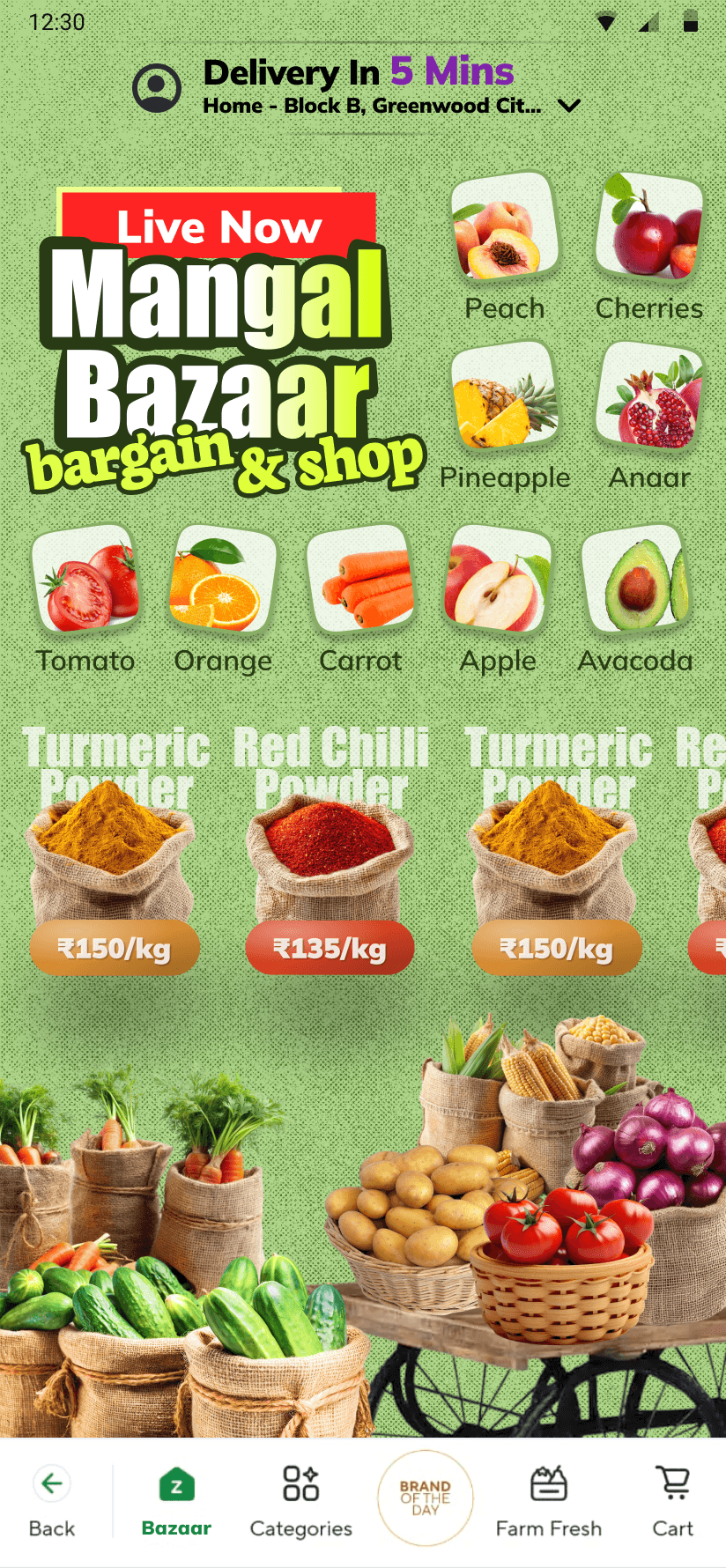
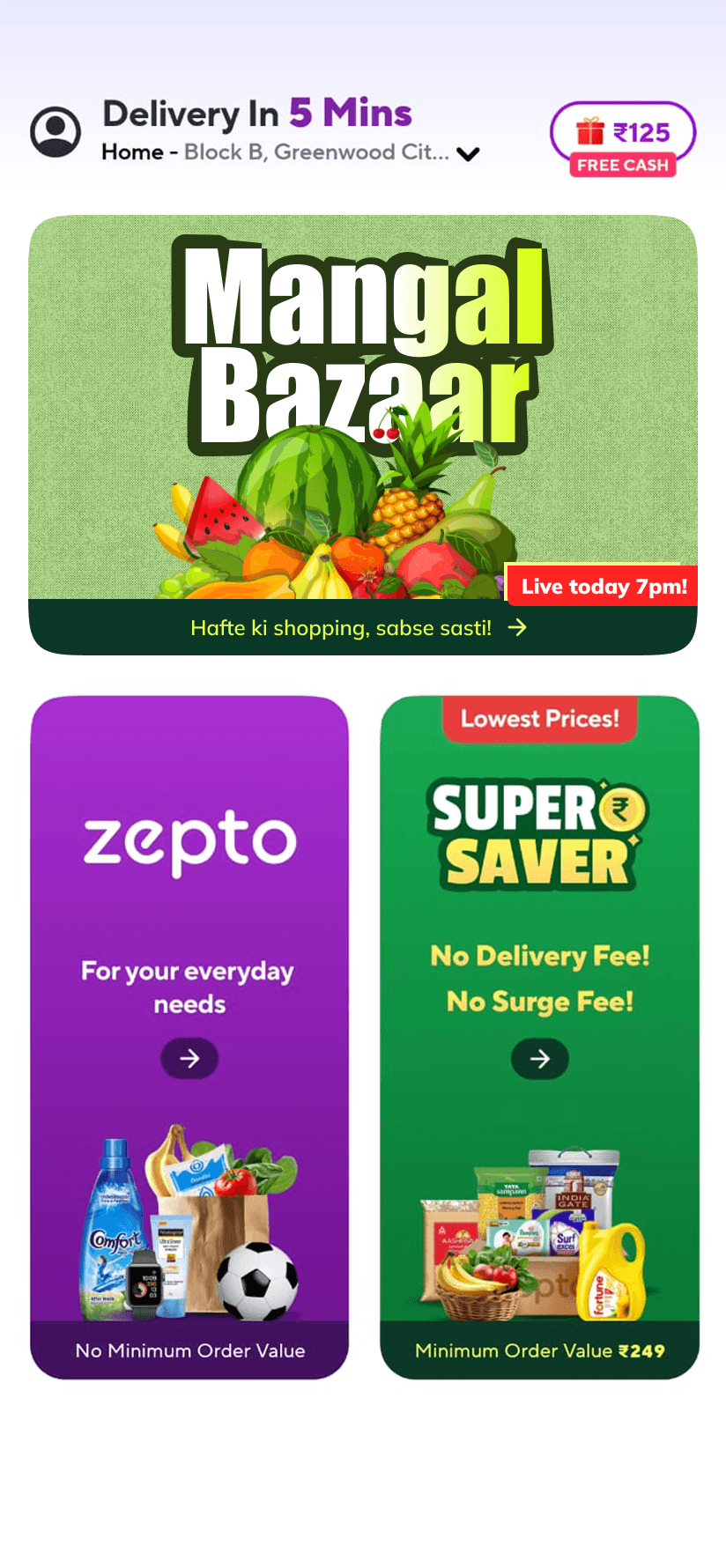
As soon as the user opens the app, they land on a page where Zepto highlights different offers like Super Saver. Right on that same page, there will be a section dedicated to the Weekly Bazaar.
The name and timing of the bazaar will depend on the user’s location. For now, I have called it Mangal Bazaar based on my area, where the weekly market happens every Tuesday.
The page will also display the exact time when the bazaar goes live. In most areas, these local markets usually begin after 6 PM, so the same pattern can be followed within the app.
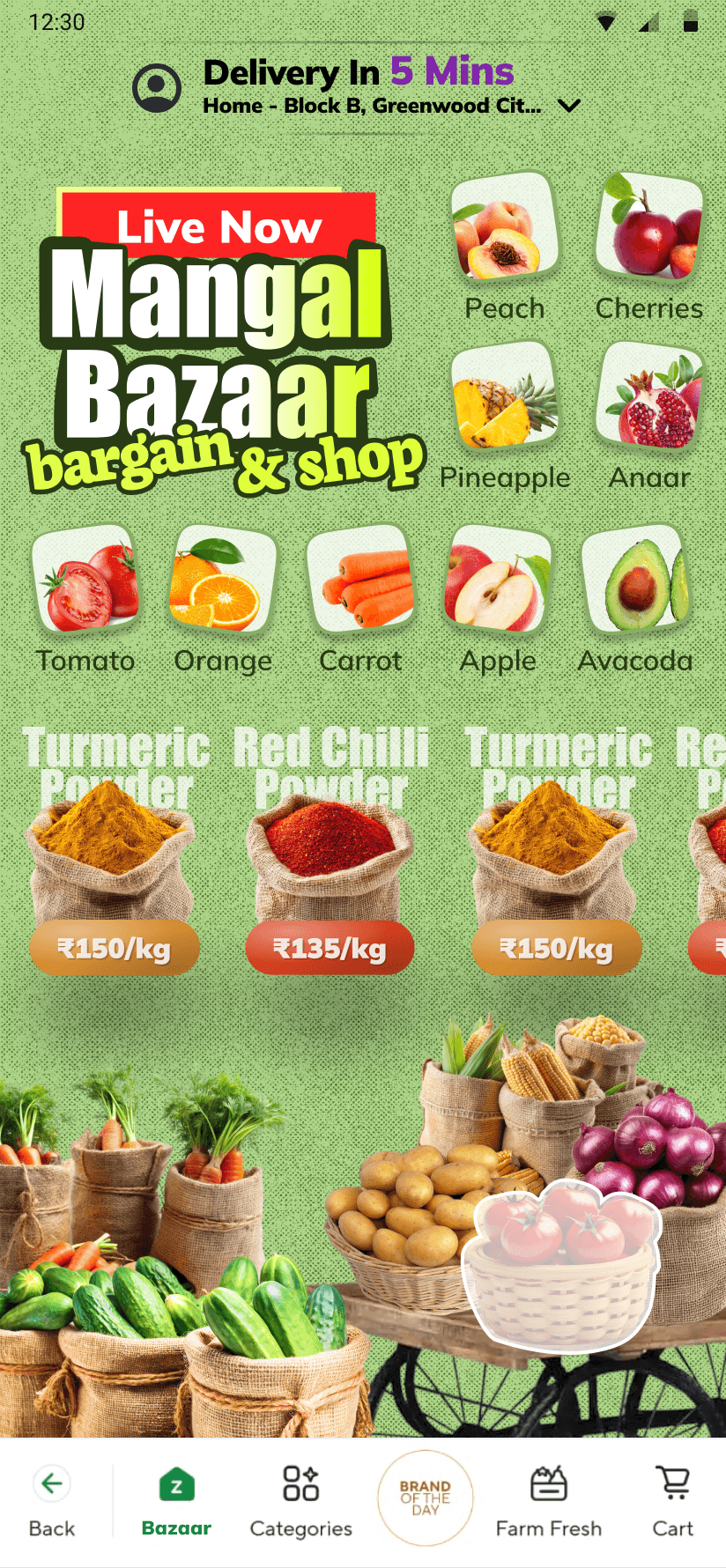
When a user taps on any product, they see a quick micro-interaction that confirms their action. For example, if someone clicks on tomatoes, a white overlay appears giving instant feedback and a sense of satisfaction.
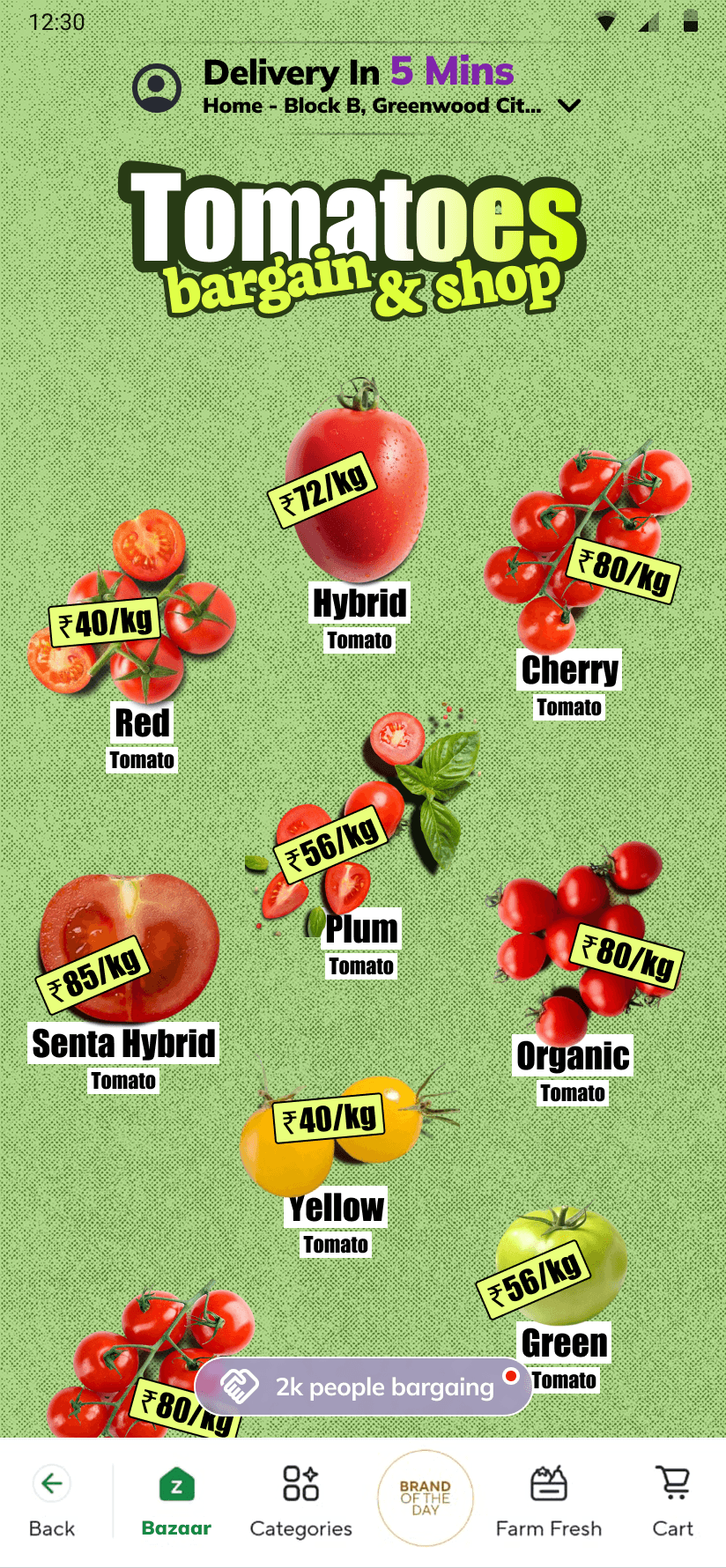
Once the user clicks on tomatoes, they are taken directly to the tomato category page. Here, they can browse through different varieties and compare options, just like in a real market.
To bring the experience to life, a live ticker shows how many people are currently looking at or bargaining for tomatoes. This creates the feeling of a busy, active bazaar where customers are not shopping alone.
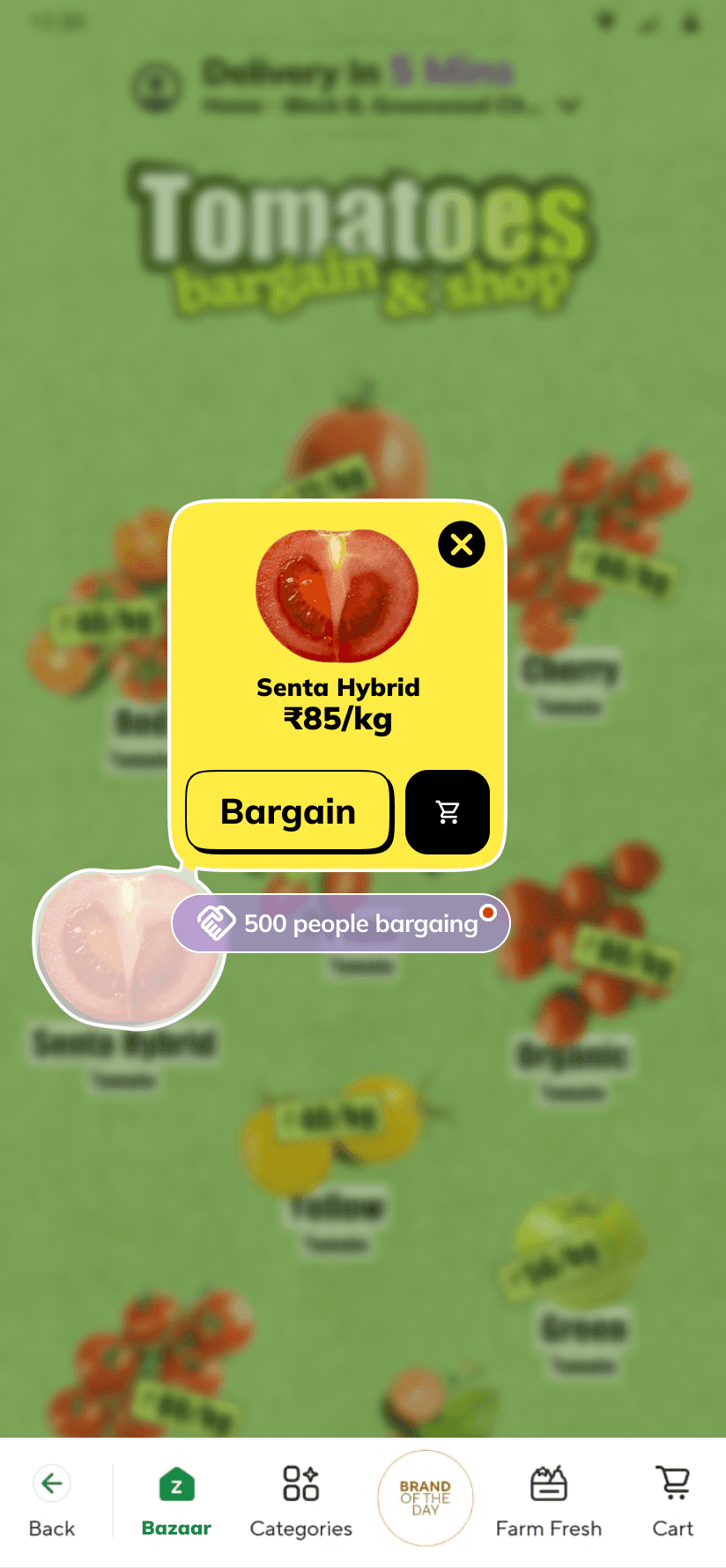
If the user selects a specific variety, like Senta Hybrid tomatoes, they are given two choices — either add the item directly to the cart or start bargaining. Alongside these options, the page also displays how many people are currently waiting to buy that particular tomato. This adds social proof and urgency, encouraging quicker decisions while keeping the market experience engaging.
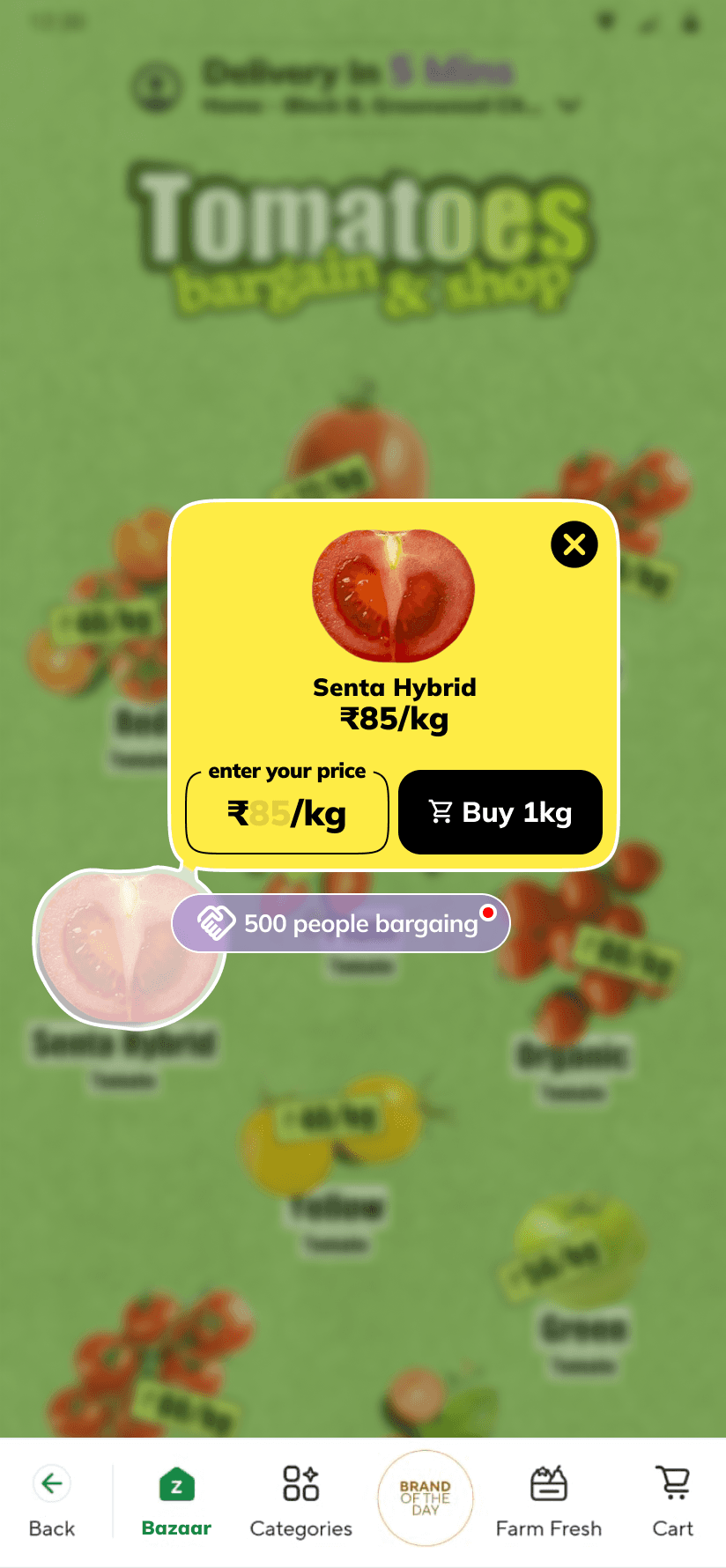
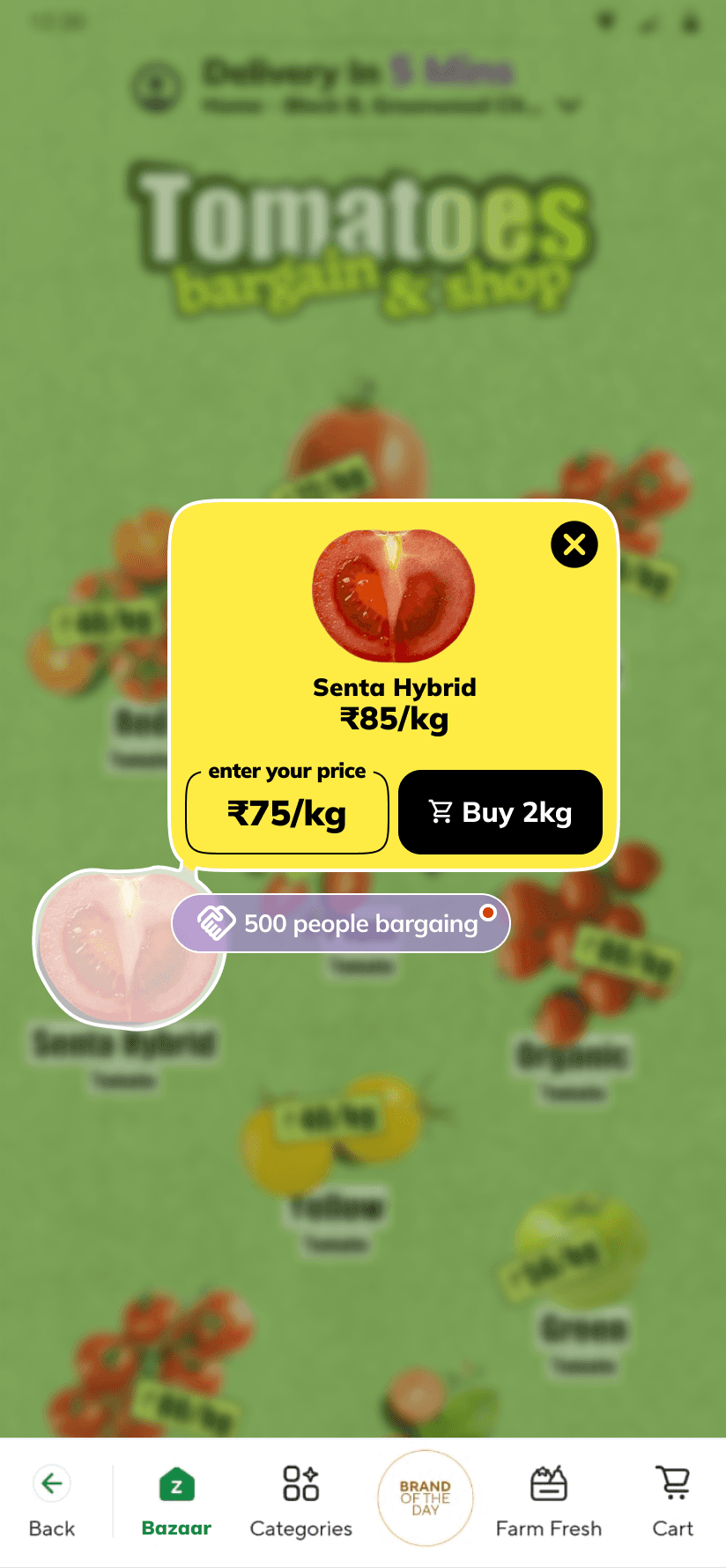
This feature is designed to give users the same habit and feeling they have while shopping in local markets. At the same time, it also protects business margins.
When a user enters their own price while bargaining, the app automatically adjusts the quantity based on that rate. For example, if a user offers ₹75, the system calculates that they will get 2 kilograms at that price.
Of course, there will be a minimum threshold set, below which users will not be allowed to bargain. This ensures a fair experience for customers while keeping the business side sustainable.
I believe this is one of the most effective ways to increase basket size on Zepto. By tapping into a behavior that already exists offline and carefully translating it into the app, we can nudge users toward building larger carts without forcing it.
Through thoughtful UI and UX, I focused on solving a core business problem while keeping the experience intuitive and culturally familiar for the user.